











Introduction: Your Medical Space Speaks Before You Do
Close your eyes and imagine your ideal medical practice.
What do patients feel the moment they walk in?
Do they feel calm, safe, and confident in your care? Or do they feel anxious, rushed, and uncertain?
This emotional response is not accidental. It is the direct result of intentional medical office design.
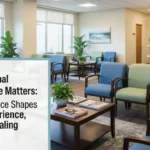
Your space communicates your professionalism, your values, and your level of care long before you ever speak to a patient. In today’s competitive healthcare environment, the design of your clinic is no longer just about compliance or functionality—it is about creating trust, comfort, and meaningful patient experiences.
Medical office design has become a critical factor in patient satisfaction, retention, and long-term success.
What Is Intentional Medical Office Design?
Intentional medical office design goes beyond arranging walls, furniture, and equipment. It focuses on how a space makes people feel, how it supports healing, and how it improves both patient and staff experience.
Many clinics are technically functional. They meet regulations, contain the necessary rooms, and operate efficiently. But something often feels missing.
That missing element is emotional alignment.
Intentional design considers:
- Patient emotional comfort
- Natural flow and movement
- Lighting and environmental psychology
- Staff efficiency and stress reduction
- Sensory experience and calmness
- Alignment with your brand and mission
When design is intentional, your clinic becomes more than a workplace—it becomes a healing environment.
How Clinic Design Directly Impacts Patient Experience
Patients often feel vulnerable when entering a medical environment. Anxiety, uncertainty, and fear are common emotions.
Your clinic design has the power to either amplify or reduce those emotions.
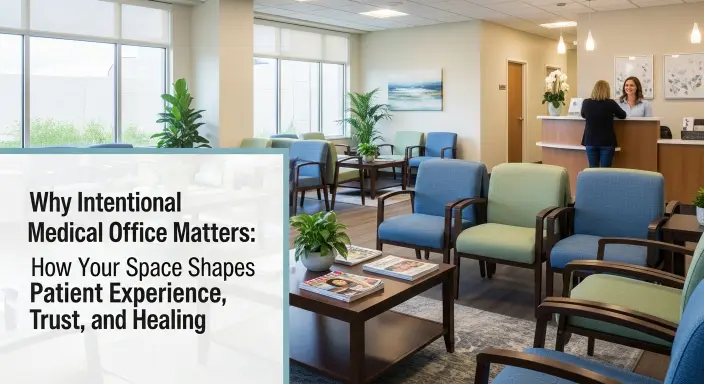
A well-designed medical space creates an immediate sense of calm and reassurance. Patients feel safe. They feel respected. They feel cared for.
This emotional comfort builds trust, which is essential in healthcare.
When patients trust their environment, they are more likely to:
- Return for future care
- Follow medical recommendations
- Leave positive reviews
- Refer others to your practice
Your space becomes part of your patient care system.
The Importance of Flow in Medical Office Design
Flow refers to how people move through your clinic—from the entrance to waiting areas, treatment rooms, and exits.
Poor flow creates confusion, delays, and stress for both patients and staff.
Intentional flow creates:
- Smooth patient transitions
- Reduced waiting anxiety
- Increased staff efficiency
- Improved overall experience
When patients move naturally and effortlessly through your clinic, they feel guided and supported.
Flow transforms chaos into calm.
It also improves operational performance, reducing staff burnout and increasing productivity.
How Lighting and Environment Influence Healing
Scientific research confirms that physical environments influence emotional and physiological responses.
Lighting, color, texture, and spatial openness all impact patient psychology.
For example:
- Natural light reduces stress and anxiety
- Soft lighting promotes calmness
- Clean, organized spaces increase trust
- Warm, welcoming materials create emotional comfort
Patients subconsciously interpret these signals.
A cold, sterile clinic may feel impersonal.
A warm, intentional clinic feels healing.
The environment itself becomes part of the treatment experience.
Luxury vs. Comfort: Finding the Right Balance in Healthcare Design
Many practices believe luxury design means expensive finishes, high-end furniture, and impressive visuals.
But true luxury in healthcare is not about appearance alone.
True luxury is emotional comfort.
A clinic can look expensive but still feel cold and disconnected.
Intentional design balances refinement with warmth. It creates spaces that feel professional yet welcoming, sophisticated yet human.
The goal is not to impress patients.
The goal is to support them.
When patients feel emotionally supported, their trust and satisfaction increase significantly.
How Your Clinic Design Reflects Your Leadership and Brand
Your medical space is a physical representation of your leadership.
It communicates:
- Your attention to detail
- Your level of care
- Your professionalism
- Your commitment to patient wellbeing
Patients and staff both interpret these signals.
A thoughtful, intentional clinic reflects excellence, confidence, and integrity.
It also strengthens your brand identity.
Your clinic becomes memorable—not just for your treatments, but for how patients felt inside your space.
The Impact of Intentional Design on Staff Performance and Satisfaction
Medical office design does not only affect patients. It also affects your team.
Poorly designed environments increase stress, inefficiency, and fatigue.
Intentional design improves:
- Staff workflow efficiency
- Communication between team members
- Emotional wellbeing
- Job satisfaction
When staff feel calm and supported, their performance improves.
Happy staff provide better patient care.
Better patient care leads to stronger practice growth.
Design directly supports your team’s success.
How Intentional Design Increases Practice Growth and Patient Retention
Healthcare is becoming increasingly competitive.
Patients have more choices than ever.
Intentional clinic design creates a competitive advantage.
It helps your practice:
- Attract premium patients
- Increase referrals
- Improve patient loyalty
- Strengthen online reputation
- Increase long-term profitability
Patients remember how your space made them feel.
That emotional memory influences whether they return or recommend your practice.
Design becomes a business growth strategy.
Your Medical Space Is More Than a Facility—It Is Your Legacy
Every detail of your clinic contributes to your long-term impact.
Intentional medical office design transforms your practice into a place where healing, trust, and excellence coexist.
It creates an environment that supports patients emotionally, improves staff performance, and strengthens your brand.
Your space becomes part of your leadership.
It becomes part of your story.
It becomes your legacy.
Conclusion: Design Is Not Just Visual — It Is Experiential
Medical office design is no longer just about meeting regulations or filling space.
It is about creating environments that support healing, trust, and emotional comfort.
When your space aligns with your purpose, everything improves:
- Patient experience
- Staff performance
- Practice growth
- Brand authority
Your clinic begins to work for you—not just operationally, but emotionally and strategically.
Because when your medical space is designed with intention, it becomes more than a clinic.
It becomes a place where people feel safe, valued, and cared for.
And that is what truly defines exceptional healthcare.